The Rise of Smart Automatic Air Purifiers in Modern Homes
Admin on 24 February, 2026 | Comments Off on The Rise of Smart Automatic Air Purifiers in Modern Homes
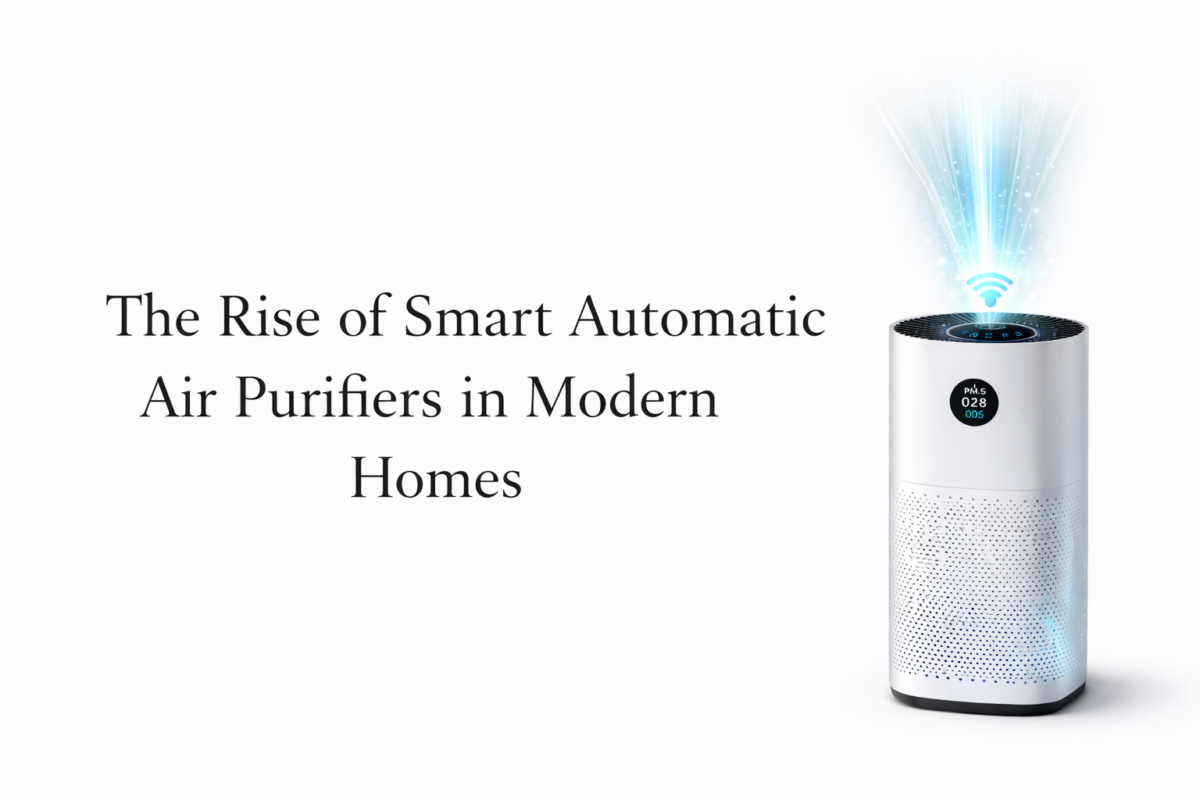
Indoor air quality has become a serious health concern. Studies show that the air inside our homes can be two to five times more polluted than outdoor air. This is alarming when you consider that most people spend nearly 90% of their time indoors. Common pollutants include pet dander, cooking fumes, VOCs from furniture, and hidden allergens. This awareness has led to an increased demand for air purifiers, especially intelligent, hands-free solutions that operate without constant human input.
Why Smart Technology Is Changing the Air Purifier Market
Traditional air purifiers required manual adjustments. You had to notice a smell, feel discomfort, or remember to turn the unit on. Smart, automatic air purifiers have changed that completely. These devices use built-in air quality sensors to continuously monitor the environment and adjust filtration speed in real time, without needing any help from the user.
Several trends are driving the growth of automatic air purifiers:
- Post-pandemic awareness: COVID-19 increased public awareness of airborne contaminants, leading to more interest in home air filtration.
- Worsening wildfire seasons: Smoke from seasonal wildfires has prompted many homeowners to invest in better filtration equipment.
- Rise of smart home ecosystems: Consumers expect their home appliances to be smart, connected, and adaptive, and air purifiers are no exception.
- Growing allergy and asthma rates: More households have members with respiratory sensitivities, making air quality monitoring a daily need.
What to Look for in a High-Performance Air Purifier
Not all air purifiers are the same, and choosing the right one requires understanding a few key specifications. Key factors to consider when looking for an air purifier include filtration technology, room coverage, CADR (Clean Air Delivery Rate), and sensor accuracy.
Here’s what sets apart a mediocre unit from a truly effective one:
- UltraHEPA or True HEPA filtration: Standard HEPA filters capture particles down to 0.3 microns with 99.97% efficiency. Some premium brands go further. AirDoctor, for example, has an UltraHEPA filter certified to trap particles as small as 0.003 microns, which is 100 times smaller than standard HEPA filters.
- Activated carbon filtration: Particles are only part of the issue. Gases, VOCs, smoke odors, and chemical fumes need activated carbon or carbon/charcoal filters for proper neutralization.
- Auto mode with real-time sensors: A good automatic air purifier should actively sample the air and adjust its fan speed accordingly, rather than just running at a fixed speed.
- Quiet operation: Whisper-quiet settings are important for bedroom use. Many high-end models operate below 30 decibels at their lowest setting.
- Ozone-free certification: Some air purifiers emit ozone as a byproduct, which can irritate the lungs. Look for units tested and certified as ozone-safe.
How Automatic Air Purifiers Actually Work
The “smart” aspect of automatic air purifiers comes from their sensor systems and responsive controls. Most quality units have sensors for particulate matter (measuring PM2.5 levels) and some also measure VOC concentrations and CO2 levels. These readings inform the device’s logic system, which adjusts the fan speed as needed.
AirDoctor’s auto mode is a strong example of this. The unit’s professional-grade air quality sensor constantly monitors particulate matter and VOCs, showing real-time readings on a color-coded ring. If it detects a spike, from cooking or a pet, it automatically increases the fan speed and then quietly reduces it once the air is clean. This type of responsive automation makes modern air purifiers practical for everyday family life.
Beyond the mechanics, what truly sets a premium automatic air purifier apart is consistency. A unit that only performs well when manually monitored defeats the purpose. The AirDoctor air purifier has earned strong marks here; it runs quietly in the background around the clock, maintaining healthy air even while you sleep, cook, or simply go about your day. That kind of reliable, set-and-forget performance is what transforms an air purifier from a gadget into a genuine household essential.
Room Coverage and Placement: Getting the Most from Your Unit
A common mistake when buying air purifiers is underestimating coverage needs. A purifier rated for 300 square feet placed in a 700-square-foot open space will run constantly and still not perform well.
Smart placement tips include:
- Matching CADR to room size: Generally, multiply the room’s square footage by 1.5 to find the minimum recommended CADR rating.
- Central placement for open spaces: Place the unit in the center of the room or near the main source of pollutants, like the kitchen, pet beds, or high-traffic areas, for the best results.
- Dedicated units for bedrooms: Air quality during sleep is crucial. Running a quiet purifier in the bedroom at night ensures you breathe clean air while resting.
- Avoid corners and walls: Keep units at least 12 to 18 inches from walls to allow for proper airflow circulation through the filter.
The Long-Term Value of Investing in Clean Air
Quality air purifiers are not cheap, but their benefits go beyond comfort. Research links improved indoor air quality to better sleep, fewer allergy and asthma symptoms, improved cognitive performance, and lower rates of respiratory illness. For families with children, elderly members, or anyone with respiratory issues, a good air purifier is more of a health necessity than a luxury.
Brands like AirDoctor have built their reputation on offering medical-grade filtration in a home-friendly design. Their multi-stage filtration system (UltraHEPA plus dual-action carbon/VOC filters) targets various indoor air pollutants rather than just one kind.
Conclusion
Modern homes have hidden dangers to respiratory health. Fortunately, today’s smart, automatic air purifiers make it easier than ever to manage these risks without effort, guesswork, or compromise.
Whether you’re considering your first automatic air purifier or upgrading to a more advanced system, focusing on filtration depth, sensor responsiveness, and quiet operation will help you choose a unit that truly works. Brands like AirDoctor set a high bar for what consumer-grade air purification can achieve, making clean air more attainable than ever.